
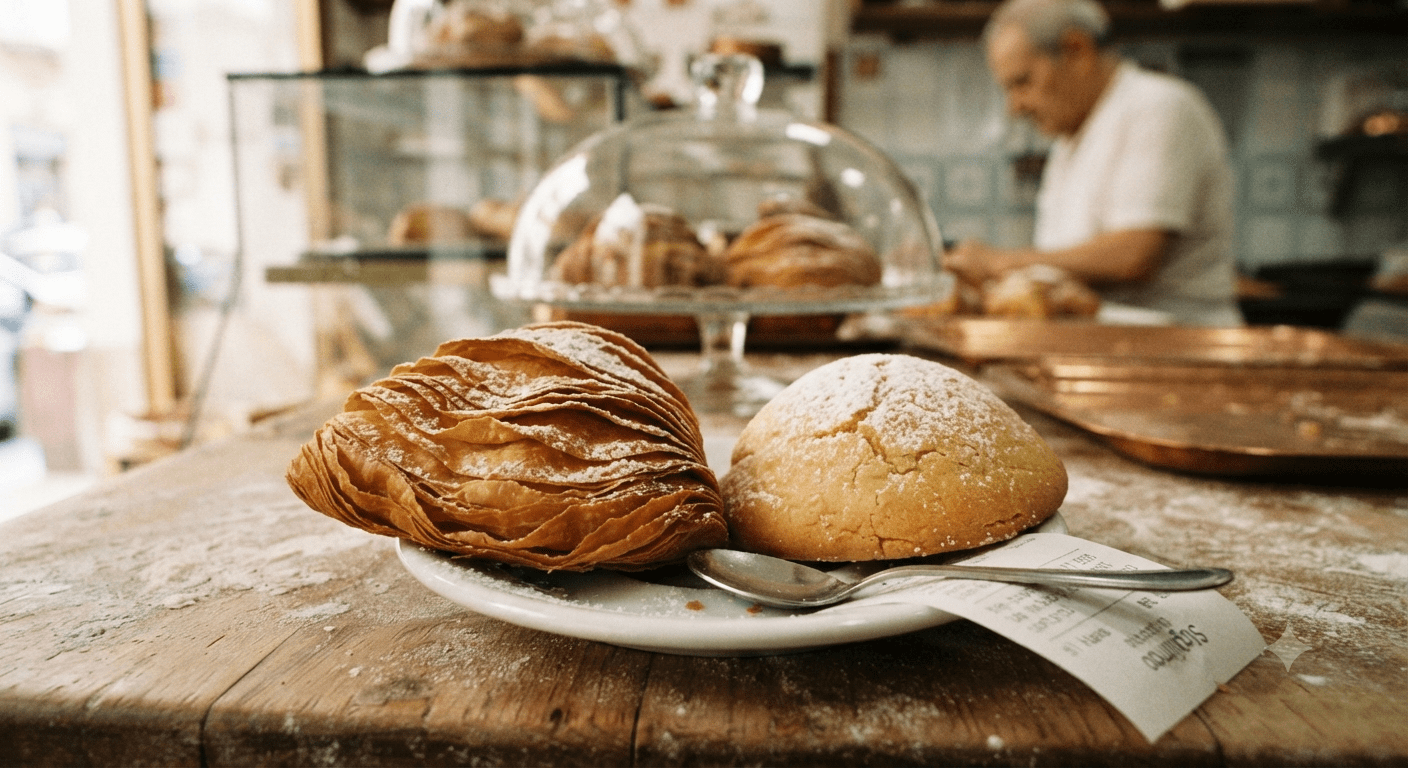
If you’ve ever walked the vibrant, narrow streets of Naples, Italy, you’ve likely been lured by the intoxicating scent of warm pastry and citrus wafting from a local pasticceria. At the heart of this sensory experience is the sfogliatella, a pastry that stands as a true monument to Neapolitan culinary ingenuity. With its intricate, shell-like layers and a rich, spiced filling, the sfogliatella is more than just a sweet treat—it is a labor of love and a piece of living history.
The name itself, sfogliatella, is derived from the Italian word sfoglia, meaning “thin leaf” or “layer.” This name perfectly describes the pastry’s structure: a delicate, crunchy masterpiece that shatters upon the first bite, revealing a velvety, aromatic heart. Whether you are a seasoned traveler who has visited the Campania region or a curious home baker, understanding the sfogliatella requires diving into its monastic origins, its precise construction, and the eternal debate between its two most famous variations.
A Legacy Born in the Cloisters: The History of the Sfogliatella
The origins of the sfogliatella trace back to the 17th century, specifically to the Santa Rosa monastery in Conca dei Marini, located on the stunning Amalfi Coast. Legend has it that a clever nun, eager to avoid wasting leftover semolina, decided to combine it with milk, ricotta cheese, sugar, and bits of dried fruit.
To contain this mixture, she prepared a simple dough. The result was a divine success. This initial creation was known as the Santa Rosa pastry, a precursor to the modern sfogliatella we recognize today. It remained a guarded secret within the monastery walls until 1818, when a visionary Neapolitan pastry chef named Pasquale Pintauro acquired the recipe.
Pintauro brought the sfogliatella to the bustling streets of Naples, modifying the original design and introducing it to the masses. His shop on Via Toledo became legendary, and the sfogliatella quickly cemented its status as the city’s signature pastry, evolving from a convent secret into an icon of Italian street food culture.
The Tale of Two Pastries: Riccia vs. Frolla
When you step up to the counter in a Neapolitan bakery, you are almost always faced with a choice: sfogliatella riccia or sfogliatella frolla. While both share the same soul-satisfying filling, their “shells” offer entirely different textures and experiences.
The Sfogliatella Riccia (The “Curly” One)
The sfogliatella riccia is the version most people imagine when they think of this delicacy. Its signature shell is made from a highly technical process involving thin sheets of dough layered with lard or butter and rolled into a tight log. When sliced, these layers fan out, creating the iconic “curly” appearance. Once baked, the sfogliatella riccia is incredibly crispy and flaky, providing a satisfying “crunch” that is synonymous with the craft.
The Sfogliatella Frolla (The “Short” One)
In contrast, the sfogliatella frolla is made using pasta frolla, a rich, buttery shortcrust pastry. This version is shaped into a smooth, round dome rather than a clam-like shell. Because it lacks the thousands of delicate layers found in the sfogliatella riccia, the texture is softer and more crumbly, offering a tender bite that melts in your mouth. Many locals prefer the sfogliatella frolla for breakfast, as it is often considered slightly less messy to eat on the go.
The Secret Filling: What Makes a Sfogliatella Irresistible?
The filling is the common thread that unites both the sfogliatella riccia and the sfogliatella frolla. It is a masterclass in balancing textures and flavors. A traditional sfogliatella filling typically includes:
- Semolina: Cooked with milk to create a thick, creamy porridge-like base.
- Ricotta Cheese: Specifically cow’s milk ricotta, which provides the velvety, mild foundation.
- Candied Citrus: Usually orange or citron peel, which cuts through the richness with a bright, aromatic sweetness.
- Spices: Hints of cinnamon, vanilla, or even cardamom, providing a warm, complex profile.
- Egg Yolks: These act as a binding agent, ensuring the filling stays set and moist during the high-heat baking process.
The combination of the warm, dense interior and the crispy, buttery exterior creates a contrast that is difficult to replicate, which is why the sfogliatella remains a high-skill specialty that few attempt to master at home.
Where to Find the Best Sfogliatella in Naples
If you find yourself in the birthplace of the sfogliatella, you have a duty to sample the best. While many bakeries offer this treat, a few institutions stand out:
- Antico Forno delle Sfogliatelle Calde Fratelli Attanasio: Located near the Central Station, this is widely considered the “gold standard.” The sfogliatella here is served steaming hot, straight from the oven.
- Pintauro: On Via Toledo, this historic shop is where the modern sfogliatella journey began in 1818. It is a pilgrimage site for any true pastry lover.
- Sfogliatella Mary: Located in the elegant Galleria Umberto I, this kiosk offers a convenient way to enjoy an authentic sfogliatella while admiring the city’s stunning architecture.
- Pasticceria Scaturchio: A historic institution in the city center, known for its high-quality ingredients and classic preparation of both the sfogliatella riccia and frolla.
Master the Technique: Tips for Success
If you are brave enough to tackle the sfogliatella in your own kitchen, keep these tips in mind:
- Patience is Key: Creating the sfogliatella riccia requires rolling the dough until it is almost translucent. You cannot rush the lamination process.
- Temperature Control: Keep your fats (butter/lard) and dough cool. If the fat gets too warm, it will soak into the dough instead of creating those distinct, flaky layers.
- Drain the Ricotta: Ensure your ricotta is extremely well-drained. Any excess moisture will turn your filling into soup and prevent the sfogliatella from baking properly.
- The Right Flour: Use high-protein bread flour or “Manitoba” flour to ensure the dough has enough strength to be stretched thin without tearing.
Conclusion
The sfogliatella is more than a dessert; it is a testament to the history and passion of Naples. Whether you prefer the intricate, paper-thin crunch of the sfogliatella riccia or the comforting, buttery embrace of the sfogliatella frolla, this pastry offers a sensory experience that defines the Italian spirit. From the quiet cloisters of the 17th century to the bustling, neon-lit counters of modern Naples, the sfogliatella has remained a constant source of joy for all who encounter it. If you haven’t yet, make sure to add “eating a fresh sfogliatella in Naples” to your bucket list—it is an experience that will stay with you long after the final, sugary crumb has vanished.
Frequently Asked Questions (FAQs)
1. Is the sfogliatella eaten cold or warm?
Traditionally, a sfogliatella is best served warm. Heating the pastry helps revive the crispiness of the riccia layers and enhances the aromatic spices within the filling. Many top-tier bakeries in Naples pull them from the oven throughout the day so they are almost always served warm to the customer.
2. What is the main difference in ingredients between the two types?
The filling for the sfogliatella riccia and the sfogliatella frolla is identical. The difference lies entirely in the dough. The riccia uses a laminated dough (similar to puff pastry but much tighter), while the frolla uses a sweet. Buttery shortcrust dough that does not require layering.
3. Why is the sfogliatella sometimes called a “lobster tail”?
In many parts of the United States, the sfogliatella riccia is often referred to as a “lobster tail” due to its physical resemblance to the shell of a lobster. While the name is different, the underlying traditional recipe remains largely the same as the Italian original.
4. Can I freeze sfogliatella?
Yes, you can freeze unbaked sfogliatelle. It is best to assemble them, freeze them on a baking sheet, and then store them in an airtight container. When you’re ready to enjoy them, bake them directly from frozen. Adding a few extra minutes to the baking time to ensure the center is heated through.
5. Is the filling of a sfogliatella vegan?
Traditional sfogliatella fillings are not vegan. They contain ricotta cheese (dairy), eggs, and often use lard in the pastry shell. While some modern bakeries may experiment with plant-based alternatives. The authentic Neapolitan recipe relies heavily on these animal products for its classic taste and texture.
