
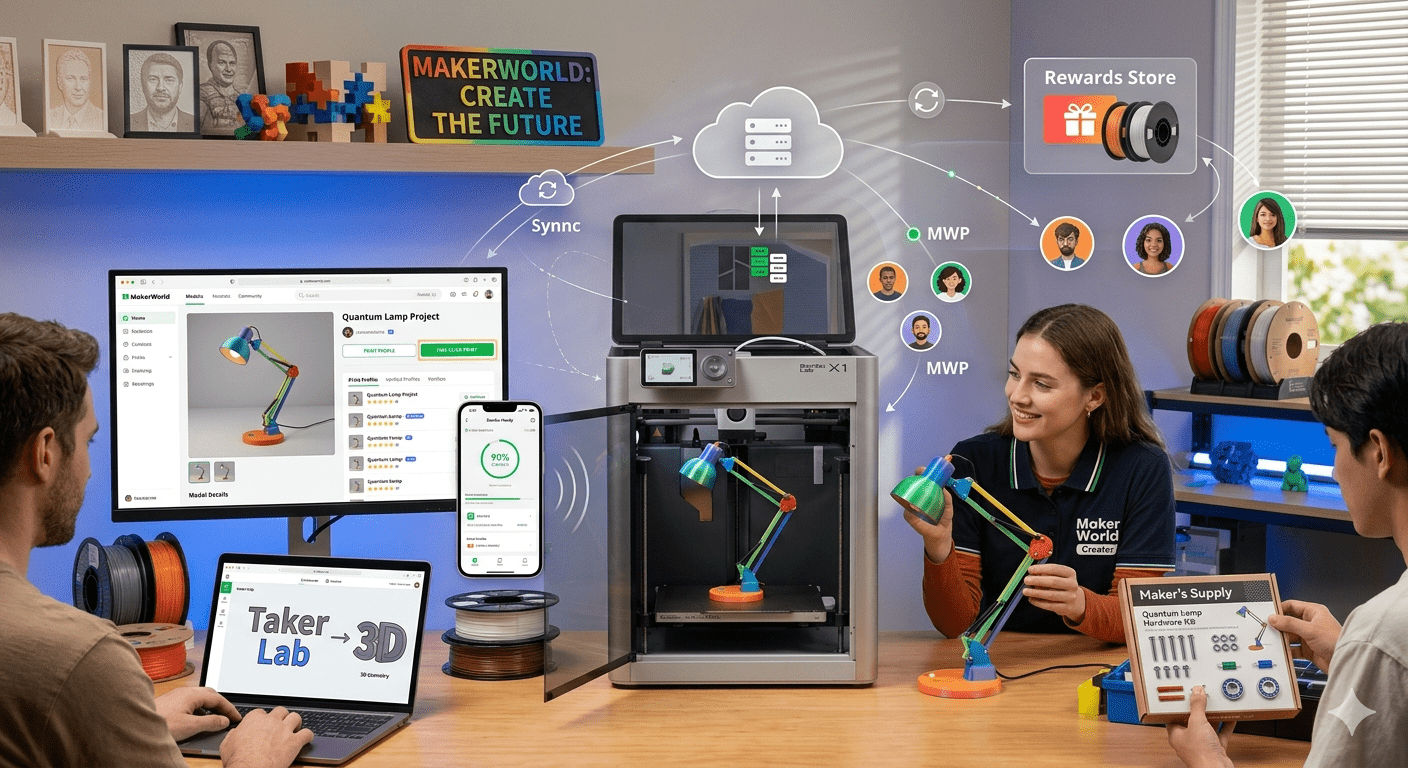
The 3D printing landscape has undergone a massive evolution over the last decade. It began as a highly technical hobby reserved for engineers and code-savvy makers. Today, it has transformed into an accessible, creative playground for people of all ages.
At the center of this modern revolution sits MakerWorld, a community-driven platform that has fundamentally changed how we discover, share, and print 3D models. Launched by the hardware innovators at Bambu Lab, this platform bridges the gap between complex digital design and seamless physical creation.
Whether you are a seasoned designer looking to monetize your intellectual property or a beginner unboxing your first 3D printer, understanding this platform is your key to unlocking the future of manufacturing at home. This guide dives deep into everything you need to know about the ecosystem, its game-changing features, and how you can get the most out of it.
What is MakerWorld?
Launched as a direct response to the fragmented nature of traditional 3D model repositories, MakerWorld is a comprehensive, cloud-based platform built to streamline the 3D printing experience. While older platforms often require users to download raw files, configure individual slicer settings, and manually manage printer parameters, this ecosystem handles the heavy lifting through cloud integration.
+-------------------------------------------------------------+
|                         MAKERWORLD                          |
|  (Centralized Hub: Models, Slicing Profiles, & Community)   |
+------------------------------+------------------------------+
                               |
            +------------------+------------------+
            |                                     |
            v                                     v
   [ Bambu Studio ]                         [ Bambu Handy ]
(Desktop Advanced Slicing)               (Mobile One-Click Print)
            |                                     |
            +------------------+------------------+
                               |
                               v
                     [ Your 3D Printer ]
The platform acts as a bridge. It connects 3D model creators, print profile experts, material vendors, and general users into a singular, highly collaborative space.
By integrating closely with slicing software like Bambu Studio and mobile apps like Bambu Handy, it creates an ecosystem where a user can find a model on their phone and start printing it instantly.
Key Features That Set MakerWorld Apart
The platform did not become a community favorite overnight by accident. It introduced several distinct innovations that addressed the historical pain points of the 3D printing community.
1. Multi-Plate Project Support and One-Click Printing
In traditional repositories, complex models with dozens of parts require you to download multiple individual STL files. You then have to lay them out across several virtual print beds manually.
The MakerWorld framework utilizes the advanced 3MF file format. This allows creators to upload an entire project across multiple virtual plates simultaneously.
- Pre-Sliced Success: Print profiles are uploaded by experienced makers who have already optimized the orientation, support structures, and infill percentages.
- Zero-Guesswork Execution: Users can select a profile that matches their specific printer model and filament type, then click “Print.” The cloud handles the slicing and sends the data straight to the machine.
2. The Print Profile Verification System
A common frustration on older file-sharing sites is downloading a beautiful model, only for the print to fail due to poor internal settings. This platform solves that issue by allowing the community to upload and rate specific “Print Profiles” for a single model.
If an independent user finds a way to print a complex sculpture faster or with fewer supports, they can upload their profile to that model’s page. Other users vote on these profiles, ensuring that the highest-quality, most reliable settings rise to the top.
3. MakerLab: Built-In Generative Design Tools
Not everyone knows how to use complex Computer-Aided Design (CAD) software to create custom objects from scratch. To democratize creation, the platform includes MakerLab, a suite of browser-based generative tools.
       [ Custom Text / Images ]
                  │
                  ▼
   ┌─────────────────────────────┐
   │    MakerLab Web Engines     │
   │  (Sign, Puzzle, Vase, etc.) │
   └──────────────┬──────────────┘
                  │
                  ▼
     [ Ready-to-Print 3D Model ]
With MakerLab, users can interact with specialized design apps without installing any software:
- Make My Sign: Instantly converts text, uploaded SVGs, and geometric borders into multi-colored 3D signs.
- Pixel Puzzle Maker: Transforms family photographs into physical, interlocking block puzzles.
- Lithophane & Lantern Tools: Automatically converts flat images into intricate, light-reactive structures.
The MakerWorld Points and Rewards System
One of the most disruptive elements introduced to the community is the highly lucrative incentive system. The platform actively rewards creators, profile builders, and everyday users for contributing positive value to the ecosystem.
How to Earn Points
The system distributes points based on authentic engagement and the popularity of shared assets. You can earn points through several activities:
- Model Uploads: Earn points when your original designs are downloaded and printed by the community.
- Print Profile Contributions: If your optimized print settings for someone else’s model get highly rated and utilized, you accumulate points.
- Community Interaction: Participating in themed design contests, uploading photos of your successful physical prints, and leaving detailed reviews can all earn rewards.
Redeming Your Rewards
Accumulated points can be exchanged directly in the platform’s digital shop. This allows active members to run their printing operations with minimal overhead. Points can be redeemed for:
- Bambu Lab Gift Cards: Use these digital vouchers to buy official hardware, spare parts, or upgrades directly from the manufacturer.
- Premium Filaments: Trade points for specialized materials like PLA, PETG, ABS, or support filaments.
- Hardware Kit Components: Access specialized electronic parts or mechanical hardware needed to complete advanced community projects.
Navigating the Maker’s Supply Integration
A common barrier in advanced 3D printing projects is the need for non-printed components. If you print a functional desk lamp, a remote-controlled car, or a mechanical clock, the plastic shell is only half of the equation. You still need wires, LED strips, bearings, and fasteners.
To solve this, the platform features Maker’s Supply, an integrated catalog of standardized hardware components.
┌────────────────────────────────────────────────────────┐
│                   MakerWorld Project                   │
│                                                        │
│  ┌───────────────────────┐   ┌──────────────────────┐  │
│  │   3D Printed Shell    │ + │    Maker's Supply    │  │
│  │   (Downloaded Files)  │   │  (Hardware/LED Kit)  │  │
│  └───────────────────────┘   └──────────────────────┘  │
└───────────────────────────┬────────────────────────────┘
                            │
                            ▼
              [ Completed Functional Object ]
When a designer builds a model that requires mechanical or electronic parts, they can link those components directly to the official Bill of Materials (BOM) page.
Users browsing the model can see exactly which screws, motors, or light kits are needed. They can add those exact hardware elements to their cart with a single click, completely eliminating the guesswork of sourcing hardware from third-party sites.
How to Get Started on MakerWorld
Getting involved with the community is incredibly straightforward, regardless of what brand of 3D printer sits on your workbench.
For General Users and Makers
If you simply want to find incredible things to build, your journey begins by setting up a free profile.
Download the mobile application to browse the catalog from anywhere. When you find an object you like, you can check user reviews, view pictures of real-world results, and select the community print profile that matches your material.
If you use compatible hardware, hitting print will warm up your machine and start the project automatically.
For Content Creators and Designers
If you are a digital artist or mechanical engineer, uploading your work to the platform is a great way to gain visibility and earn passive rewards.
Ensure your uploads include clean geometry, informative titles, and descriptions that detail any specific assembly instructions.
By uploading your native project files with pre-configured color assignments, you increase the likelihood that users will leave five-star ratings, driving more traffic and points to your profile.
Best Practices for Maximizing Your Success
Whether you are trying to earn rewards or simply looking to achieve pristine print quality on your first try, following community standards is essential.
Tips for Perfect One-Click Prints
- Read the Description: Always check if the designer recommends a specific material type or structural layout.
- Inspect the Selected Profile: Look for profiles uploaded by verified creators or those with highly positive community feedback.
- Calibrate Your Material: Ensure your machine’s automated calibration sequences are active to accommodate minor differences in material behavior.
Tips for Growing a Creator Profile
- Take High-Quality Photos: Avoid relying purely on digital software renders. Users trust listings that show a real, physical piece of plastic sitting on a real print bed.
- Organize Your Assemblies: Use the multi-plate 3MF layout wisely. Group similar parts together and label your virtual plates clearly (e.g., “Plate 1: Internal Gears,” “Plate 2: Outer Shell”).
- Engage with Your Comments: If a user reports a structural issue or geometry bug, fix it quickly and update the file version to build long-term community trust.
Conclusion
MakerWorld has fundamentally transformed 3D printing from a fragmented, highly technical pursuit into an interconnected, consumer-friendly ecosystem. By combining a vast model repository with automated cloud slicing, generative web tools, hardware integration, and a thriving community rewards structure, it sets a new standard for how physical objects are shared and built globally.
As the platform continues to add new features, expand its mechanical catalog, and welcome thousands of international creators, its influence on manufacturing will only grow. Dive into the catalog, find a project that inspires you, and experience the power of truly seamless creation today.
Frequently Asked Questions (FAQs)
1. Do I need to own a Bambu Lab printer to use MakerWorld?
No, you do not need an official Bambu Lab machine to use the platform. While the one-click printing features and mobile app are optimized for their native hardware ecosystem, the platform welcomes all makers. You can easily download files as standard 3MF or STL objects and open them in any slicing software, such as PrusaSlicer or Cura, to prepare them for your specific 3D printer.
2. Is MakerWorld free to use for downloading and uploading models?
Yes, the platform is completely free for both creators and general users. There are no subscription fees or paywalls standing between you and the model library. Users can download files at no cost, and designers can host their portfolios on the site for free while remaining eligible for the community points program.
3. How does the copyright protection system work on the platform?
The platform takes intellectual property protection very seriously. It features clear reporting tools that allow designers to flag unauthorized re-uploads or digital remixes that violate original Creative Commons licenses. The moderation team actively reviews copyright strikes to ensure that original creators are credited properly and that their reward points are protected.
4. Can I earn real money from the reward points I accumulate?
While you cannot cash out your points directly into a standard bank account, they hold tangible financial value within the ecosystem. By converting your points into official gift cards, you can purchase retail items such as brand-new printers, expensive accessories, and filament refills. For active creators, this system effectively eliminates the operational costs of running a workshop.
5. What makes a 3MF file format better than a standard STL file?
A standard STL file only contains raw 3D mesh data—the basic geometry of the object’s shape. It contains no information regarding color, material settings, layer height, or plate layout. In contrast, a 3MF file acts as an all-in-one project folder. It stores the exact model orientation, multi-material color painting assignments, structural support settings, and multi-plate arrangements, allowing for a truly reliable printing experience.
