
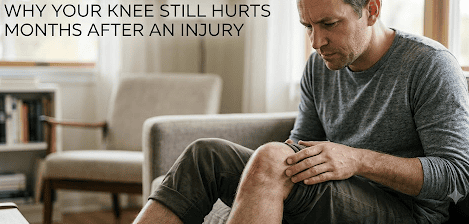
If your injury happened months ago but your knee still reminds you about it every time you climb the stairs, squat to pick something up, or head out for a walk, you’re not alone. Persistent knee pain after injury is a common reason people seek medical advice, especially when recovery doesn’t go as expected.
While many knee injuries improve within weeks, ongoing pain isn’t something you should simply “learn to live with”. It can point to an injury that hasn’t fully healed, changes in how your body moves, or a condition that needs further assessment. Understanding the reason behind the pain is the first step towards getting back to comfortable movement.
Why does my knee still hurt months after an injury?
Healing isn’t always straightforward. Even if the swelling has settled, the tissues inside your knee may still be recovering or compensating for damage.
Some of the most common causes include:
A ligament injury that hasn’t fully recovered
Ligaments help stabilise your knee. A sprain involving the ACL, MCL, or other ligaments may continue to cause discomfort if the joint hasn’t regained its strength and stability through proper rehabilitation.
You might notice:
- Pain during twisting movements
- A feeling that the knee “gives way”
- Swelling after physical activity
A meniscus tear
The meniscus acts as a cushion between the thigh bone and shin bone. Small tears may settle with rehabilitation, but others can continue to cause problems.
Typical symptoms include:
- Sharp pain when twisting
- Clicking or catching sensations
- Swelling after exercise
- Difficulty squatting
Cartilage damage
Unlike muscles, cartilage has a limited blood supply, so it heals slowly. Damage to the joint surface may lead to aching pain that lingers long after the original injury.
Weak muscles and altered movement
Pain often causes people to protect the injured leg. Over time, the muscles around the hip, thigh, and knee become weaker, placing extra stress on the joint.
It’s a little like driving a car with slightly misaligned wheels. Everything still works, but the wear gradually builds up.
Is long term knee pain after a sprain normal?
Some discomfort during recovery is expected, particularly after moderate or severe sprains. However, pain that continues for several months, especially if it affects your daily activities, deserves attention.
Recovery depends on several factors, including:
- The severity of the injury
- Whether rehabilitation exercises were completed
- Returning to sport or work too soon
- Your overall health and fitness
Simply waiting for the pain to disappear rarely solves the underlying issue if the knee remains unstable or weak.
Can an old knee injury get worse over time?
Yes. An untreated injury can gradually affect the way your knee functions.
For example, if the joint feels unstable, your body naturally changes the way you walk. Over months or years, those altered movement patterns can increase stress on the cartilage, tendons, and surrounding muscles.
Previous knee injuries are also associated with a higher risk of developing osteoarthritis later in life, particularly after significant ligament or meniscus injuries. That doesn’t mean arthritis is inevitable, but it does highlight the importance of proper recovery.
When should I see a doctor for ongoing knee pain?
You don’t need to panic if your knee aches occasionally after a busy day. Persistent or worsening symptoms, however, shouldn’t be ignored.
Arrange a medical assessment if you experience:
- Pain lasting longer than expected
- Recurrent swelling
- Locking or catching of the knee
- The knee giving way
- Difficulty fully straightening the leg
- Pain that limits everyday activities
- Inability to comfortably bear weight
A healthcare professional can assess whether imaging, physiotherapy, or another treatment approach is appropriate.
What treatments help chronic knee pain after an injury?
Treatment depends on the cause, but many people improve without surgery.
Common evidence-based treatment options include:
Structured rehabilitation
A tailored exercise program helps rebuild strength, improve balance, and restore confidence in the knee. Physiotherapy is often considered the foundation of long-term recovery.
Staying active
Complete rest can actually slow recovery. Gentle movement within comfortable limits usually helps maintain joint mobility and muscle strength.
Knee supports
Compression sleeves or braces may provide additional support during daily activities while reducing mild swelling for some people. They work best alongside an active rehabilitation program rather than replacing one.
Managing weight bearing
If walking is painful, temporary use of Forearm Crutches can reduce pressure on the injured knee while allowing you to stay mobile during recovery. They can be particularly helpful during flare-ups or in the early stages of rehabilitation.
Lifestyle habits matter
Simple changes can make a noticeable difference:
- Maintain a healthy body weight
- Wear supportive footwear
- Warm up before exercise
- Increase activity levels gradually
- Continue strengthening exercises even after the pain improves
Don’t ignore what your knee is telling you
Persistent knee pain after injury isn’t always a sign of serious damage, but it is your body’s way of saying something still needs attention. Whether the problem is lingering weakness, a meniscus injury, or joint irritation, early assessment and the right rehabilitation plan can help prevent ongoing discomfort and support a stronger recovery.
If your knee pain is limiting your mobility, supportive products such as braces or Forearm Crutches may make everyday movement more comfortable while you work through your rehabilitation. Combined with professional advice and consistent exercise, they can help you move forward with greater confidence.
FAQs
1. Why does my knee still hurt months after an injury?
Persistent pain may result from incomplete healing, ligament injuries, meniscus tears, cartilage damage, muscle weakness, or altered movement patterns that continue to stress the joint.
2. Is long term knee pain after a sprain normal?
Some soreness can persist during recovery, but pain lasting several months or affecting daily activities should be assessed by a healthcare professional.
3. When should I see a doctor for ongoing knee pain?
Seek medical advice if your knee repeatedly swells, locks, gives way, cannot fully straighten, or if pain continues despite rest and rehabilitation.
4. Can an old knee injury get worse over time?
Yes. Without appropriate rehabilitation, an old injury may lead to instability, altered movement, and an increased risk of joint degeneration over time.
5. What treatments help chronic knee pain after an injury?
Treatment often includes physiotherapy, strengthening exercises, activity modification, supportive knee braces when appropriate, and temporary mobility aids such as Forearm Crutches if weight bearing is painful. Surgery is only necessary for selected conditions.
